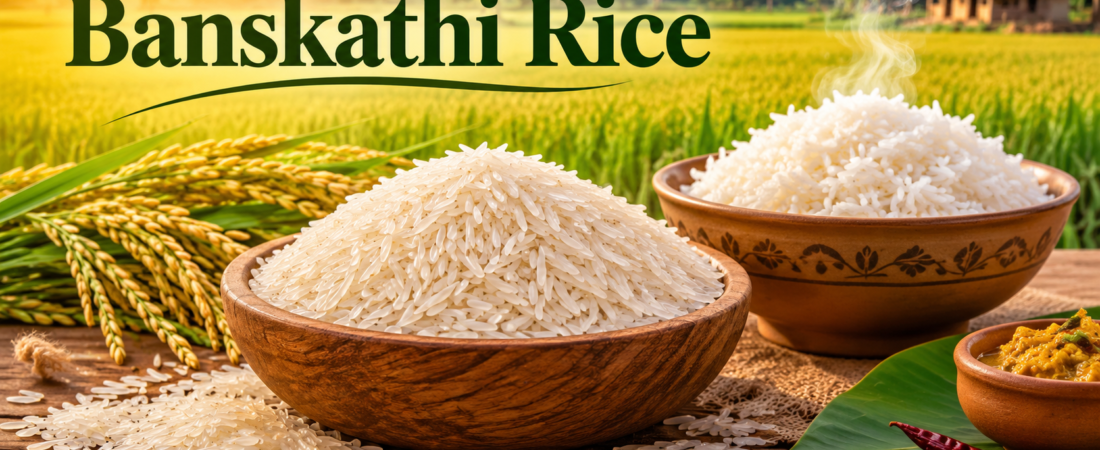
Rice is more than an everyday food in Bengal; it represents a long-standing agricultural tradition, regional identity, and an important part of household cooking. Among the different rice varieties associated with West Bengal, Banskathi Rice has earned recognition for its slender grains, pleasant taste, and suitability for regular meals. Its distinctive characteristics make it an interesting choice for families, restaurants, rice traders, and people who appreciate traditional Indian rice varieties.
Banskathi Rice is particularly associated with the rice-producing regions of West Bengal, India. It is generally marketed as a premium non-basmati rice variety and is valued for its appearance, cooking qualities, and versatility. From simple steamed rice to traditional Bengali pulao and homemade biryani, this variety can complement numerous dishes.
Understanding Banskathi Rice involves looking beyond its appearance. Its regional background, processing methods, grain characteristics, culinary applications, and market importance all contribute to its identity. This guide explores these aspects to provide a detailed understanding of this distinctive rice variety.
Quick Facts About Banskathi Rice
| Category | Information |
|---|---|
| Name | Banskathi Rice |
| Food Category | Rice and Cereal Grains |
| Origin | West Bengal, India |
| Rice Classification | Non-Basmati Rice |
| Grain Appearance | Slender and elongated |
| Grain Colour | White to off-white |
| Aroma | Mild natural aroma |
| Texture | Depends on processing and preparation |
| Main Ingredient | Rice |
| Common Uses | Daily meals, pulao, biryani, and fried rice |
| Primary Market | India, particularly West Bengal |
| Food Type | Staple Cereal |
What Is Banskathi Rice?
Banskathi Rice is a traditional market-recognized rice variety associated with West Bengal. It is generally known for its long, relatively thin grains and its position within the non-basmati rice category. Unlike some premium aromatic rice varieties that are primarily reserved for special occasions, Banskathi Rice is also marketed as a practical option for regular household consumption.
Also read: Paradisehill: Meaning, Background, Features and Overview
One of its most recognizable features is its slender appearance. The grains can look particularly attractive when properly milled and sorted. Their visual quality, combined with their cooking versatility, contributes to the variety’s popularity among consumers.
Banskathi Rice is available in different commercial preparations, including parboiled and polished forms. These processing differences can influence its colour, cooking time, texture, and final appearance. Consequently, consumers may encounter slightly different characteristics depending on the producer and product grade.
The variety is especially relevant to Bengali food culture, where rice remains an essential component of everyday meals.
Origin and Regional Background of Banskathi Rice
West Bengal has a long agricultural history closely connected with rice cultivation. Its fertile plains, river systems, seasonal rainfall, and established farming communities create favourable conditions for producing different varieties of paddy.
Banskathi Rice is commercially associated with several rice-producing areas of the state, including districts such as Purba Bardhaman and Purba Medinipur. These regions have developed extensive agricultural and rice-processing activities over generations.
Local rice mills, agricultural businesses, wholesalers, and farmers contribute to the movement of Banskathi Rice from cultivation areas to consumer markets.
The name Banskathi is also commonly written as Banshkathi or Baskathi in different commercial contexts. These spelling variations can appear in product descriptions, packaging, and wholesale listings.
However, the exact historical origin of the name and its relationship with particular traditional paddy cultivars should not be assumed without reliable agricultural documentation.
The regional association remains important because it connects the product with Bengal’s wider agricultural economy and food traditions.
Physical Characteristics and Grain Quality
The appearance and quality of rice influence consumer preferences, especially when choosing a variety for everyday cooking or commercial food preparation.
Banskathi Rice is commonly described as having slender, elongated grains. Its appearance is one of the features that distinguishes it in the non-basmati rice market.
Grain Shape and Appearance
The grains generally have a narrow profile and an attractive elongated appearance. Depending on the processing grade, they may appear white, polished, or slightly off-white.
Uniformity is another important quality indicator. Rice with consistent grain size and fewer broken pieces is generally preferred by retailers and consumers.
Colour and Processing
Commercial Banskathi Rice can undergo different milling and sorting processes. Polished rice usually has a cleaner, brighter appearance, while less-polished products may retain more of the outer grain layers.
Parboiling is another processing method used by rice manufacturers. It involves soaking, heating, and drying paddy before milling. This process changes certain physical properties of the grain and can influence its cooking behaviour.
Aroma and Taste
Banskathi Rice is generally marketed as having a mild natural flavour. Its taste is suitable for pairing with strongly flavoured curries, lentils, vegetables, and meat preparations.
Its aroma may vary between brands and processing grades. Consumers should therefore assess the actual product rather than assume that every package has identical fragrance characteristics.
How Banskathi Rice Is Processed
Rice processing plays an important role in determining the final quality of the product. After harvesting, paddy passes through several stages before becoming ready for household consumption.
1. Harvesting and Initial Cleaning
Farmers harvest mature paddy when the crop reaches the appropriate stage. The harvested material is collected and prepared for further processing.
Initial cleaning removes unwanted materials such as straw, dust, soil, and other agricultural debris.
2. Drying
Moisture management is essential for maintaining rice quality. Paddy is dried to an appropriate moisture level before storage or milling.
Proper drying helps reduce storage-related problems and supports more consistent processing.
3. Parboiling or Milling Preparation
Depending on the product, paddy may undergo parboiling before milling. Alternatively, it may be processed through a conventional milling method.
Parboiling generally involves soaking, steaming, and drying the paddy. The process can influence the grain’s physical strength and cooking characteristics.
4. Husking and Polishing
The outer husk is removed during the milling process. Further processing separates the edible rice from remaining bran layers.
Polishing determines how much of the outer surface is removed and contributes to the finished appearance.
5. Sorting and Packaging
Modern rice mills may use mechanical grading and optical sorting equipment to separate broken grains, discoloured pieces, and foreign materials.
The finished product is then packed in suitable bags for wholesale distribution, retail sale, and transportation.
Nutritional Composition of Banskathi Rice
Rice is primarily a source of carbohydrates and provides dietary energy. Like other rice varieties, the nutritional composition of Banskathi Rice depends on its processing, polishing level, and preparation method.
White polished rice generally contains a substantial amount of starch. It also provides smaller quantities of protein and naturally occurring micronutrients.
The outer bran layers of rice contain several nutrients, including dietary fibre, certain B vitamins, and minerals. Milling and polishing can remove some of these components.
Parboiling may help retain certain nutrients within the grain compared with conventional milling, although the final nutritional profile depends on the production process.
Carbohydrates and Energy
Carbohydrates are the main energy-producing component of rice. They provide the body with fuel for normal physical activities and everyday metabolic functions.
Because rice is carbohydrate-rich, portion size matters when planning balanced meals.
Protein Content
Rice contains plant-based protein, although it does not provide the same protein concentration as many pulses, beans, and other protein-rich foods.
Combining rice with lentils, beans, dairy products, eggs, or other protein sources can create a more balanced meal.
Gluten-Free Food Option
Plain rice is naturally gluten-free. This makes it an alternative grain for individuals who need to avoid gluten.
However, people with celiac disease should check packaging and processing information to ensure that the product has not been exposed to cross-contamination.
Culinary Uses of Banskathi Rice
Versatility is an important reason consumers choose different rice varieties. Banskathi Rice can be used in several preparations, depending on its specific grain characteristics and processing grade.
Everyday Steamed Rice
One of the simplest ways to prepare Banskathi Rice is by boiling or steaming it.
Its relatively slender grains make it suitable for serving alongside traditional meals consisting of dal, vegetables, fish, and meat curries.
Bengali Pulao
Bengali pulao combines rice with aromatic spices, vegetables, ghee, and other ingredients.
Banskathi Rice can be considered for this preparation, although the final texture depends on the product’s grain quality and cooking method.
Homemade Biryani
Biryani requires rice that can cook evenly and complement a combination of spices, vegetables, or meat.
Banskathi Rice offers another non-basmati option for home-style biryani. However, people seeking the characteristic fragrance and exceptionally long cooked grains of traditional basmati may prefer a dedicated basmati variety.
Fried Rice
Fried rice is another practical application. Properly cooked and cooled rice can be combined with vegetables, eggs, seasonings, and other ingredients.
The key is to avoid overcooking the grains before frying.
Rice with Dal and Curry
In Bengali households, rice is commonly served with lentils, seasonal vegetables, fish, and different curry preparations.
Banskathi Rice fits naturally into this style of everyday cooking because its relatively mild flavour allows accompanying ingredients to remain prominent.
How to Cook Banskathi Rice Properly
Cooking quality rice requires attention to water quantity, temperature, soaking time, and resting.
The following method provides a useful starting point for preparing Banskathi Rice.
Ingredients
- 1 cup Banskathi Rice
- Approximately 2 cups water, adjusted according to the product
- A small amount of salt, if desired
- A few drops of cooking oil or ghee, if preferred
Preparation Method
Step 1: Measure the Rice
Measure the required quantity and remove any visible unwanted particles.
Step 2: Wash Thoroughly
Rinse the rice gently with clean water. Two or three rinses are generally sufficient for ordinary household preparation.
Step 3: Soak the Grains
Soaking for approximately 15–30 minutes may help achieve more even cooking, although the requirement varies according to whether the rice is parboiled or polished.
Step 4: Add Water
Place the washed rice and suitable quantity of water in a cooking pot.
Step 5: Cook at a Controlled Temperature
Bring the water to a boil, then reduce the heat and cover the pot. Allow the rice to cook until the grains become tender.
Step 6: Allow It to Rest
Once the water has been absorbed and the rice is cooked, switch off the heat. Leave the covered pot undisturbed for approximately five minutes.
Step 7: Separate the Grains
Gently fluff the rice using a fork or rice paddle before serving.
Cooking instructions printed on the package should take priority because different Banskathi Rice products may require different water ratios and cooking durations.
Banskathi Rice Compared with Basmati Rice
Banskathi Rice and basmati rice are both used in various rice-based dishes, but they belong to different commercial categories.
Understanding their differences can help consumers select the appropriate variety.
| Feature | Banskathi Rice | Basmati Rice |
|---|---|---|
| Classification | Non-basmati | Basmati |
| Grain Appearance | Slender and elongated | Long and slender |
| Aroma | Generally mild | Characteristically aromatic |
| Common Origin | West Bengal association | Indian subcontinent |
| Culinary Uses | Daily meals, pulao, biryani | Biryani, pulao, special meals |
| Market Position | Everyday and premium non-basmati segments | Premium aromatic rice segment |
The most important distinction is not simply grain length. Basmati has a recognized identity associated with its characteristic aroma and cooking qualities.
Banskathi Rice offers a different option for consumers who prefer a slender non-basmati variety.
Quality Factors to Consider Before Buying
Selecting good-quality rice requires more than looking at the price or packaging.
Consumers should consider several factors before purchasing Banskathi Rice.
Grain Uniformity: Look for products with relatively consistent grain size and shape.
Broken Grain Percentage: A lower proportion of broken grains may be preferable for preparations where appearance matters.
Cleanliness: The rice should be free from visible stones, dust, insects, and other unwanted materials.
Moisture and Storage: Properly stored rice should remain dry and protected from excessive humidity.
Processing Information: Check whether the product is parboiled, polished, or less polished.
Packaging Quality: Choose sealed packaging that clearly displays the product name, manufacturer details, weight, and relevant food information.
Freshness: Check the packing date and storage instructions before purchasing.
These considerations are useful for both household buyers and commercial food businesses.
Agricultural and Economic Importance
Rice cultivation supports millions of agricultural livelihoods across India. In West Bengal, it remains a central component of rural economic activity.
The production and marketing of Banskathi Rice contribute to a broader network involving farmers, rice mills, packaging businesses, wholesalers, transport operators, and retailers.
Supporting Local Agricultural Communities
Regional rice production creates opportunities for farming households and agricultural workers. Different rice varieties also allow local markets to serve consumers with varying preferences and budgets.
Rice Milling and Employment
Rice mills are an important part of the agricultural supply chain. They transform harvested paddy into market-ready products through cleaning, drying, milling, grading, and packaging.
These activities generate employment and support local business development.
Retail and Wholesale Distribution
Banskathi Rice is available through different commercial channels, including regional rice mills, grocery retailers, wholesalers, and online food marketplaces.
Its presence in multiple package sizes makes it suitable for individual households as well as restaurants and other food businesses.
Storage Tips for Maintaining Rice Quality
Proper storage is necessary to protect rice from moisture, insects, and unwanted odours.
A few simple practices can help maintain its quality.
- Keep Banskathi Rice in a clean, dry, airtight container.
- Store it away from direct sunlight and excessive heat.
- Avoid placing rice near damp walls or areas with high humidity.
- Always use dry utensils when removing rice from storage.
- Keep newly purchased rice protected from insects and household pests.
- Follow the manufacturer’s storage recommendations.
For larger quantities, suitable food-grade storage containers and clean, dry storage rooms can help maintain product quality.
Why Banskathi Rice Remains an Interesting Choice
Banskathi Rice represents an important part of the diverse rice market associated with Bengal. Its slender appearance, everyday cooking applications, and regional agricultural connections give it a distinct position among non-basmati rice options.
Also read: Hrmtaila Explained: Meaning, Uses, Risks and Key Facts
Its appeal is not limited to one particular recipe or consumer group. Households may appreciate its suitability for regular meals, while restaurants and food businesses can consider it for selected rice-based preparations.
Another important aspect is the relationship between traditional agricultural production and modern rice processing. Farmers and mills continue to supply regional markets, while grading, packaging, and distribution systems help bring the product to a wider audience.
As consumers become increasingly interested in regional food products, varieties such as Banskathi Rice deserve attention for their culinary usefulness and connection with local food traditions.
Frequently Asked Questions (FAQs)
1. What is Banskathi Rice?
Banskathi Rice is a non-basmati rice variety commercially associated with West Bengal, India. It is generally recognized for its slender grains and suitability for everyday meals and different rice-based recipes.
2. Where does Banskathi Rice come from?
Banskathi Rice is primarily associated with West Bengal. Rice-producing areas such as Purba Bardhaman and Purba Medinipur are connected with its commercial production and processing.
3. Is Banskathi Rice a type of basmati?
No. Banskathi Rice is generally classified as non-basmati rice. Although certain products may have similarly slender grains, they should not automatically be considered basmati.
4. What does Banskathi Rice taste like?
It generally has a mild rice flavour that works well with vegetables, lentils, fish, meat, and traditional Bengali curries. The exact taste and aroma can vary depending on the product and processing method.
5. Is Banskathi Rice suitable for everyday meals?
Yes. It is marketed as an option for regular household consumption and can be served with a variety of traditional dishes.
6. Can Banskathi Rice be used for biryani?
Yes. It can be used for homemade biryani, depending on the preferred grain texture. However, consumers looking for the distinctive aroma of basmati may prefer traditional basmati rice.
7. Is Banskathi Rice naturally gluten-free?
Yes. Plain rice is naturally gluten-free. However, packaged products should be checked for possible cross-contamination during processing and packaging.
8. What is the difference between polished and parboiled Banskathi Rice?
Polishing refers to removing outer grain layers during milling, while parboiling involves soaking and heating paddy before milling. These processes affect the grain’s appearance, texture, and cooking properties.
9. How should Banskathi Rice be stored?
Store it in a dry, airtight container away from direct sunlight, moisture, and insects. Proper storage helps preserve its quality and freshness.
10. Is Banskathi Rice suitable for Bengali pulao?
It can be used for Bengali-style pulao, depending on the desired texture and the specific product grade. Appropriate washing, soaking, and cooking techniques help achieve better results.
11. What should consumers check before buying Banskathi Rice?
Consumers should examine grain uniformity, broken grain percentage, cleanliness, processing information, packaging quality, and freshness before making a purchase.
12. Is Banskathi Rice available in different package sizes?
Yes. Commercial suppliers offer Banskathi Rice in different package sizes, ranging from smaller household packs to larger wholesale bags. Availability depends on the manufacturer and retailer.
A Lasting Place in Bengal’s Rice Tradition
The story of Banskathi Rice reflects the importance of regional agricultural products in everyday food culture. Its connection with West Bengal, recognizable grain characteristics, and versatility in traditional cooking make it a noteworthy choice within India’s diverse non-basmati rice market.
Whether prepared as simple steamed rice, served alongside a homemade curry, or incorporated into a special rice dish, Banskathi Rice offers consumers another way to appreciate Bengal’s rich culinary landscape. Its continued presence in regional markets also highlights the importance of farmers, rice processors, and local businesses in preserving the diversity of India’s food traditions