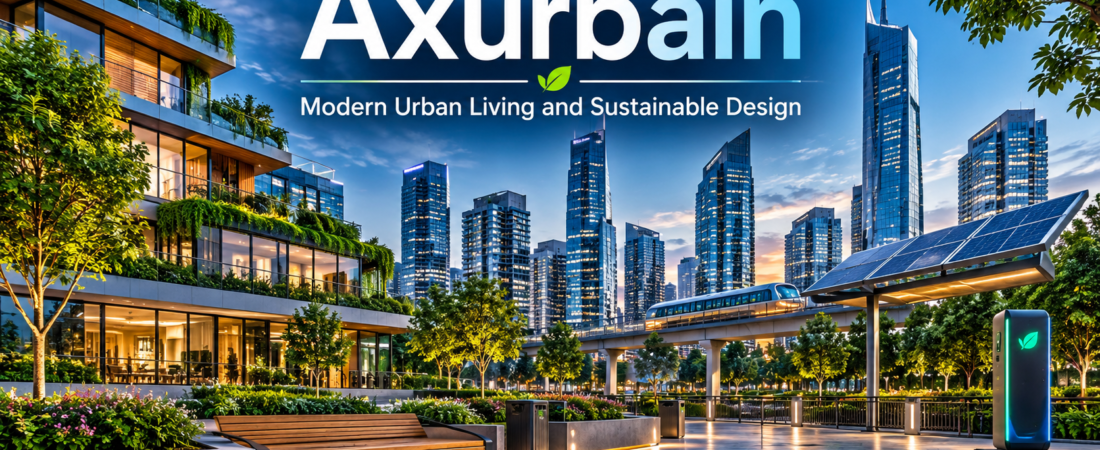
Axurbain: Meaning, Modern Urban Living, Design, and Future Possibilities
Introduction
Modern cities are constantly evolving as technology, architecture, environmental awareness, and changing lifestyles reshape the way people live and interact. New concepts are emerging to explain these transformations, and Axurbain is one of the distinctive terms attracting attention in discussions about contemporary urban environments. It is associated with modern architecture, sustainable development, innovative public spaces, and the growing relationship between people and the cities they inhabit.
Understanding Axurbain requires looking beyond a single definition. The name appears in different contexts, including urban design discussions, digital publishing, and the French urban-furniture industry. These interpretations share an interest in how urban environments can become more functional, attractive, and responsive to modern needs.
Whether someone encounters Axurbain while researching architecture, exploring sustainable lifestyles, or learning about innovative city infrastructure, the subject offers an interesting perspective on the future of urban development.
Axurbain Key Facts and Overview
| Category | Information |
|---|---|
| Name | Axurbain |
| Primary Association | Urban living and contemporary design |
| Related Industries | Architecture, urban planning, sustainability |
| Other Identity | Urban-living digital media |
| Business Association | French urban-furniture industry |
| Main Themes | Innovation, public spaces, modern lifestyles |
| Development Focus | Sustainable and functional environments |
| Relevance | Contemporary urban development |
What Is Axurbain?
Axurbain is an emerging term used in connection with contemporary urban environments, architecture, sustainable lifestyles, and modern city development. Its meaning depends on the context in which it appears, making it important to distinguish between its conceptual and commercial associations.
In discussions about urban development, Axurbain represents a broad vision of environments that combine thoughtful architecture, practical infrastructure, environmental responsibility, and modern technology. The underlying idea is that cities should not simply accommodate growing populations. They should also provide comfortable living conditions, accessible services, attractive public spaces, and opportunities for meaningful community interaction.
The concept also appears in digital publishing, where Axurbain is associated with information about architecture, interior design, property development, renovation, and urban lifestyles.
However, Axurbain is not currently an internationally standardized urban-planning framework or a formally recognized category of smart city. It is more accurate to understand it as a developing term with several related interpretations.
The Different Meanings Behind Axurbain
One reason the keyword attracts curiosity is that it does not refer exclusively to one organization or concept. Understanding its different associations provides a clearer picture of its relevance.
Axurbain as a Modern Urban Concept
The conceptual interpretation connects Axurbain with the transformation of contemporary cities. It brings together established ideas from sustainable architecture, smart-city development, environmental planning, and human-centered design.
This approach considers several important questions:
- How can cities become more environmentally responsible?
- How can public transportation become more accessible?
- What makes residential neighborhoods comfortable?
- How can technology improve everyday urban experiences?
- How can public spaces encourage social interaction?
These questions are central to modern urban development. Axurbain provides a broad way to discuss them without limiting the conversation to buildings or technological infrastructure alone.
Axurbain as a Digital Media Identity
Another interpretation connects Axurbain with digital publishing focused on urban living and contemporary design.
Also read: Pantagonar Explained: Meaning, Background, Facts and FAQs
This type of media identity can bring together articles about architecture, interior decoration, real estate, renovation, sustainable materials, and changing residential preferences.
Readers interested in these subjects often want practical information rather than complicated technical explanations. They may be researching apartment design, considering property improvements, or exploring ways to make smaller living spaces more comfortable.
Within this context, Axurbain represents an editorial direction centered on modern environments and the practical experiences of people living in them.
AXURBAIN as a French Urban-Furniture Business
Axurbain also has a distinct commercial association with a French company specializing in the design and production of urban furniture and playground equipment.
The business is associated with products designed for public environments, including benches, planters, waste bins, barriers, bollards, and container screens. Its product range includes different materials, such as steel, wood, concrete, and polyethylene.
The company is based in Fabrègues, France, and its business history dates back to 1996.
This commercial interpretation is important because it demonstrates that Axurbain is not exclusively an abstract urban-development term. It is also used as a business identity within the public-space equipment industry.
Why Axurbain Is Relevant to Modern Urban Development
Cities face increasingly complicated challenges. Population growth, housing demand, environmental pressure, transportation problems, and aging infrastructure all influence the quality of urban life.
Axurbain is relevant to these discussions because its broader themes connect several areas that are often considered separately.
1. Sustainable Architecture
Sustainable architecture focuses on reducing the environmental impact of buildings while improving their long-term performance.
Modern construction increasingly considers energy efficiency, natural lighting, ventilation, insulation, and responsible material selection.
Buildings designed with these principles can reduce energy consumption and create healthier indoor environments.
For example, an apartment building with effective insulation, efficient windows, and natural ventilation may require less artificial heating and cooling than a poorly designed structure.
Axurbain is closely associated with this wider interest in architecture that balances visual appeal with environmental responsibility.
2. Intelligent Urban Infrastructure
Technology is changing the way cities operate. Digital systems can help municipalities monitor infrastructure, manage transportation, and improve public services.
Examples include:
- Smart traffic management systems.
- Digital public transportation information.
- Connected street lighting.
- Environmental monitoring equipment.
- Intelligent energy distribution.
- Data-supported infrastructure maintenance.
These technologies can make urban services more responsive when implemented responsibly.
However, technology should solve genuine problems rather than simply make infrastructure appear modern. This practical distinction is essential to the wider philosophy associated with Axurbain.
3. Better Public Spaces
Public spaces influence how people experience their neighborhoods. Parks, pedestrian areas, playgrounds, benches, and landscaped streets create opportunities for recreation and social interaction.
Good public-space design considers accessibility, safety, durability, maintenance, and visual consistency.
Urban furniture is particularly important because even relatively small design decisions can change how comfortable an outdoor environment feels.
A shaded seating area, accessible walking path, or well-positioned public bench can make a neighborhood more welcoming.
These details demonstrate how Axurbain connects large-scale urban planning with everyday experiences.
4. Environmentally Responsible Communities
Sustainable communities require more than energy-efficient buildings. They also depend on transportation choices, waste management, green infrastructure, and responsible resource consumption.
Urban gardens, green roofs, rainwater collection, and tree-lined streets are examples of practical environmental improvements.
Such measures can support biodiversity, improve local environmental conditions, and make neighborhoods more attractive.
Axurbain reflects the growing interest in combining these environmental priorities with functional city design.
The Role of Technology in Axurbain
Technology is an important element in conversations about future urban environments. Nevertheless, successful urban innovation requires careful planning, reliable infrastructure, and consideration of residents’ needs.
Artificial Intelligence and Data Analysis
Artificial intelligence and data analytics can help urban authorities understand patterns in transportation, energy use, infrastructure demand, and public services.
For instance, traffic data can help identify congestion patterns and support better road-management decisions.
Predictive maintenance systems can also help identify potential equipment failures before they create expensive problems.
Within the broader Axurbain concept, these technologies represent opportunities to improve efficiency and decision-making.
Internet of Things
The Internet of Things connects physical devices through digital communication systems.
In urban environments, connected sensors can monitor street lighting, waste containers, environmental conditions, and certain infrastructure systems.
These applications can help authorities identify operational problems and allocate resources more efficiently.
However, successful implementation requires dependable connectivity, cybersecurity measures, and responsible data management.
Renewable Energy Solutions
Renewable energy is another important part of modern urban development.
Solar panels, energy-efficient buildings, battery storage, and improved electricity management can help reduce dependence on conventional energy sources.
The benefits depend on local conditions, installation costs, infrastructure capacity, and long-term maintenance.
Axurbain’s sustainability-related interpretation naturally connects with these developments because energy efficiency is essential to creating more resilient communities.
Benefits Associated With the Axurbain Approach
Although Axurbain does not represent a formally standardized planning system, the principles commonly associated with it offer several potential advantages.
Improved Quality of Life
Well-designed neighborhoods can make everyday activities easier and more enjoyable.
Accessible transportation, safe pedestrian routes, attractive public spaces, and functional residential buildings all contribute to a better living experience.
Environmental Responsibility
Green infrastructure, efficient buildings, and sustainable transportation can help reduce environmental pressure.
These improvements are particularly important in densely populated areas where resources and available space are limited.
More Efficient Public Services
Digital monitoring systems and intelligent infrastructure can help municipalities manage resources more effectively.
When properly maintained, these solutions can improve service reliability and reduce unnecessary operational expenses.
Stronger Community Connections
Public parks, recreational facilities, pedestrian-friendly streets, and accessible gathering spaces encourage interaction between residents.
A neighborhood becomes more than a collection of buildings when its design supports community participation.
Greater Architectural Flexibility
Modern construction methods and innovative materials allow architects to explore different solutions for residential and commercial spaces.
This flexibility can support attractive buildings without overlooking practical requirements.
Challenges and Limitations of Axurbain
Despite its positive associations, modern urban development involves significant challenges. It is important to consider these limitations rather than assuming that new technology or attractive architecture automatically improves city life.
High Implementation Costs
Smart infrastructure, sustainable construction materials, and advanced energy systems can require substantial initial investment.
Smaller municipalities may struggle to finance these projects, particularly when they already face maintenance and infrastructure expenses.
Long-term planning and realistic budgeting are therefore essential.
Privacy and Data Security
Connected urban infrastructure may collect information about transportation, environmental conditions, and public services.
Although this data can improve efficiency, poorly managed systems may create privacy and security concerns.
Responsible data policies, transparent governance, and appropriate cybersecurity protections should remain priorities.
Unequal Access to Innovation
Not every neighborhood benefits equally from urban improvements.
Investment may concentrate in commercial districts or wealthier residential areas while less-developed communities continue to experience inadequate services.
Inclusive planning is necessary to prevent innovation from increasing existing inequalities.
Infrastructure Maintenance
Installing new equipment is only one part of a successful development project.
Street furniture, lighting systems, green spaces, sensors, and transportation infrastructure require regular maintenance.
Without proper management, even well-designed projects can deteriorate over time.
Axurbain and the Future of Urban Living
The future of cities will depend on how effectively communities respond to environmental, technological, economic, and social changes.
Several developments are likely to influence the subjects associated with Axurbain.
Compact and Mixed-Use Neighborhoods
Mixed-use developments combine residential buildings, workplaces, shops, recreational facilities, and public services within accessible areas.
This arrangement can reduce unnecessary travel and create more active neighborhoods.
It also allows residents to access everyday facilities without depending entirely on private vehicles.
Green Buildings and Urban Gardens
Environmental design is expected to remain important as cities respond to rising temperatures and resource challenges.
Also read: Joi Database: Features, Uses, Security, and Data Management
Green roofs, vertical gardens, natural ventilation, and energy-efficient construction can contribute to more comfortable urban environments.
Smarter Transportation Networks
Public transportation, cycling infrastructure, pedestrian routes, and improved traffic management can support more efficient movement throughout cities.
The objective should be to provide reliable choices for different residents rather than prioritizing one transportation method.
Adaptable Residential Spaces
Changing household needs are influencing residential architecture.
Flexible rooms, multifunctional furniture, efficient storage, and adaptable layouts can make smaller homes more practical.
This is particularly relevant in cities where property prices and limited space influence housing decisions.
How Individuals Can Apply Axurbain-Inspired Ideas
The broader ideas associated with Axurbain are not limited to governments, architects, or property developers. Individuals can also make practical improvements to their immediate environments.
Here are several useful starting points:
- Improve energy efficiency: Use efficient lighting, reduce unnecessary electricity consumption, and improve insulation where possible.
- Make better use of space: Choose practical furniture and organize residential areas to improve functionality.
- Introduce greenery: Indoor plants, balcony gardens, and small outdoor planting projects can make living spaces more inviting.
- Reduce waste: Separate recyclable materials and avoid unnecessary disposable products.
- Support walkable communities: Whenever practical, choose walking or cycling for short journeys.
- Participate in local initiatives: Community cleanups and neighborhood improvement projects can create lasting benefits.
These actions may appear modest, but collective participation can contribute to healthier and more functional communities.
Is Axurbain Different From a Smart City?
The terms are related, but they are not interchangeable.
A smart city generally focuses on using digital technologies, connected infrastructure, and data-driven systems to improve urban services.
Axurbain is used more broadly in discussions about urban lifestyles, architecture, sustainable development, public spaces, and technological innovation.
The distinction is primarily one of emphasis. Smart-city development often highlights technological systems, while the wider Axurbain interpretation places technology alongside architectural quality, environmental responsibility, and human experience.
Neither term guarantees successful urban development. Results depend on implementation, governance, investment, and the needs of the communities involved.
Frequently Asked Questions About Axurbain
1. What is Axurbain?
Axurbain is an emerging term associated with modern urban living, architecture, sustainable development, and contemporary city design. It also has separate media and French business associations.
2. Is Axurbain a real city?
No. Axurbain is not the official name of a recognized city. The name is associated with urban-development discussions, digital publishing, and a French urban-furniture business.
3. Is Axurbain a company?
The name is associated with a French company specializing in urban furniture and playground equipment. It is also used in connection with digital media about architecture and urban lifestyles.
4. What does Axurbain focus on?
Its broader themes include sustainable architecture, intelligent infrastructure, modern residential environments, public-space design, environmental responsibility, and improving urban experiences.
5. How is Axurbain connected to sustainability?
Axurbain is associated with ideas such as energy-efficient buildings, green infrastructure, responsible construction materials, sustainable transportation, and environmentally conscious urban planning.
6. Does Axurbain involve smart-city technology?
Yes, in its conceptual interpretation. Related technologies include connected sensors, artificial intelligence, data analytics, intelligent transportation systems, and renewable-energy management.
7. Who can benefit from Axurbain-related ideas?
Architects, urban planners, property developers, municipal authorities, designers, students, and residents can all benefit from understanding modern urban-development principles.
8. Can Axurbain principles be used in smaller communities?
Yes. Many associated ideas, including accessible public spaces, energy efficiency, green areas, and walkable neighborhoods, can be adapted to smaller towns and communities.
9. What are the main challenges associated with Axurbain?
Potential challenges include implementation costs, infrastructure maintenance, privacy concerns, unequal access to resources, and the complexity of coordinating urban-development projects.
10. What is the future of Axurbain?
Its future relevance will depend on how the term and its associated identities develop. The broader subjects it represents, particularly sustainable architecture, urban innovation, and human-centered planning, are likely to remain important.
A More Thoughtful Direction for Tomorrow’s Cities
The most valuable aspect of Axurbain is the opportunity to consider urban environments from multiple perspectives. Architecture, infrastructure, environmental responsibility, technology, and community well-being are interconnected elements of successful city development.
A modern neighborhood should not be judged solely by its impressive buildings or advanced digital systems. Its real value becomes apparent through the experiences of the people who live, work, and interact there every day.
As urban environments continue to change, the ideas associated with Axurbain provide an interesting starting point for examining how cities can become more practical, inclusive, attractive, and environmentally responsible. The challenge for future development is to turn these ambitions into measurable improvements that benefit entire communities.